 admin
admin“Ipswich’s Secret Transfer Struggle Exposed – McKenna Reveals the Truth”
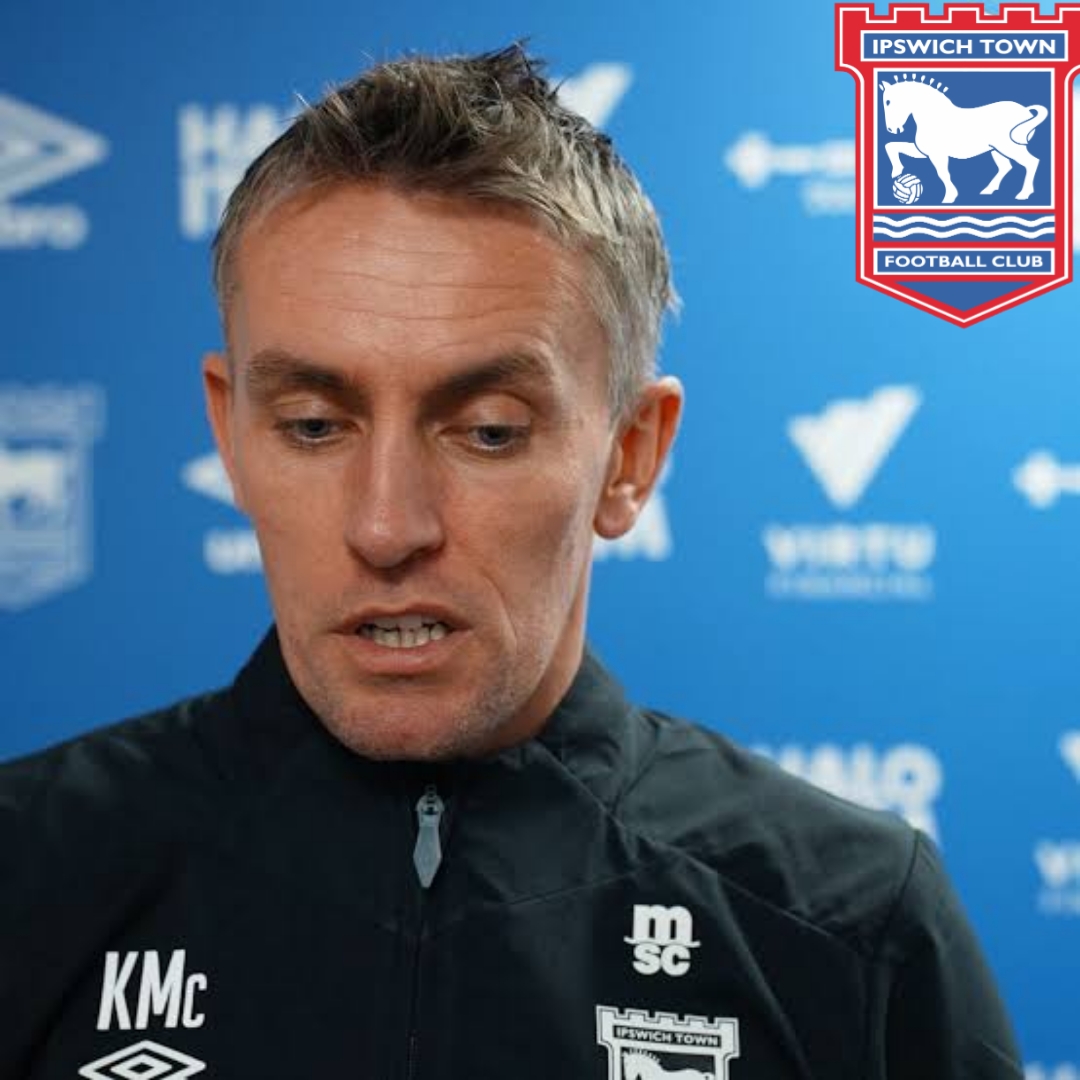
Ipswich Town boss Kieran McKenna: Foreign recruitment is vital – and there’s still work to do
Ipswich Town manager Kieran McKenna has acknowledged that the club has always recognised the need to strengthen its international recruitment network – and admits there’s still considerable progress to be made.
This summer has marked a shift in the club’s approach, with the Blues making their most significant move yet into signing players from abroad.
READ MORE: Who will make the biggest impact? Ranking Town’s summer signings from 11-1
In addition to re-signing midfielder Jens Cajuste on loan from Napoli, Ipswich have brought in Azor Matusiwa from Rennes for £7.8 million and centre-back Cedric Kipre on loan from Reims.
Spanish striker Ivan Azón has joined on loan from Italian side Como, and the club broke the Championship transfer record by spending £17.5 million on Norwegian teenager Sindre Walle Egeli from Danish club Nordsjaelland.
Chuba Akpom, a former Championship Golden Boot winner, also arrives on loan from Ajax, bringing the number of overseas signings this window to six – more than half of Ipswich’s summer additions.
This marks a departure from the club’s previous recruitment strategy under McKenna and CEO Mark Ashton, which has largely focused on developing young British players with strong resale potential.
Speaking to Town TV last Friday alongside Ashton, McKenna stressed that succeeding at the highest level requires a strong international scouting and recruitment infrastructure.
“It’s always been a key target for us,” McKenna said. “But catching up is tough. When you’ve been promoted two seasons in a row, it’s difficult to build the recruitment structure needed – especially when you’re entering a new league for the first time.”
He added: “If we were in our third Championship season – or even our seventh in League One – there would have been more time to put these things in place. But with rapid promotions, you’re bringing players into a new level constantly, which complicates things.”
McKenna made it clear that international recruitment isn’t just a preference – it’s a necessity:
“To survive and compete in the Premier League now, it’s almost impossible without a top-tier international recruitment setup. There’s simply more value to be found in overseas markets compared to the domestic one.”
He acknowledged that while the infrastructure is still being built, clear improvements have been made:
“We’re not fully where we want to be yet, but we’ve come a long way. We now have better knowledge, stronger connections, and a clearer view of international markets – and that’s allowed us to bring in talent we wouldn’t have been able to before.”
Ipswich’s summer has been one of significant transition, with 11 new players coming in and several long-serving promotion heroes moving on.
Club legend Matt Holland, interviewing McKenna, asked about the challenges new signings face in adjusting to the club and life in Suffolk.
“That’s definitely a challenge,” McKenna admitted. “It’s not just tough for the individual player – when multiple new players arrive at once, all unfamiliar with the environment, it creates extra layers of difficulty.”
Still, McKenna sees this upheaval as part of the club’s journey:
“We wouldn’t trade the success we’ve had. But if we hadn’t gone through that rise, we’d probably have started this season with seven or eight players from two or three years ago, just gradually adding one or two along the way.
“Instead, there’s been a huge shift. I think someone pointed out that against Preston recently, only one player – Leif Davis – started who had also started in the same fixture 18 months ago. That shows how much things have changed.”
He continued: “That level of turnover brings challenges, but it’s our job as coaches to integrate players quickly and get them up to speed.”
When it comes to foreign signings in particular, McKenna noted that adaptation often takes time:
“There’s no magic switch. Whether a player is coming from abroad or even just a different club in the UK, it takes time to settle – new house, new team, new style of play. And that’s true everywhere, not just here.”
He pointed out that even players who joined two or three seasons ago took time to find their footing, and some are only now becoming regular starters.
In conclusion, McKenna said:
“That’s the challenge in front of us – helping these players settle, pushing them to adapt, and building cohesion quickly. Even players who arrived last season are now playing in a very different league with very different expectations.
“We’re not the same team we were – and that’s a good thing. There’s a lot to take on, but we’re facing it head-on, working extremely hard, and I truly believe we’ll start seeing the results of that work in the weeks and months to come.”


 admin
admin