 admin
adminRegis Le Bris makes honest Sunderland admission after Bournemouth win
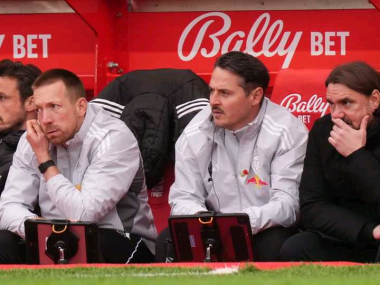
Sunderland head coach Régis Le Bris praised his team’s resilience after they overturned a two-goal deficit to beat Bournemouth 3–2, but he warned that the result was a reminder of how unforgiving the Premier League can be.
Bournemouth capitalised on two early Sunderland mistakes, with Amine Adli finishing a rapid counterattack and Tyler Adams striking a superb long-range effort before half-time.
Enzo Le Fée pulled one back around the half-hour mark, and second-half goals from Bertrand Traoré and Brian Brobbey sealed a remarkable comeback against a side pushing for European qualification.
“This league is extremely demanding,” Le Bris said. “We made two small mistakes and were punished immediately. Being 2–0 down after 15 minutes is tough, especially because we started well with the ball.”
He acknowledged Bournemouth’s strengths, particularly down their left side in transition.
“They have the best pressing distance allowed in the league, and our low build-up was good.
But we knew their left side would be strong and we struggled to manage that. Even when we were in a mid or low block, they found solutions. It was a balanced game and a big achievement.”
Reflecting on the turnaround, Le Bris said belief was the key factor.
“Sometimes when you’re 2–0 down you give up because you don’t believe things can change. Here, because we started well, we had clear references.
We were able to progress, find solutions through the middle, and create chances high up the pitch. That fed our confidence. One goal can change the momentum, especially at home with our supporters.”
Le Bris made two changes from the side beaten by Fulham, shifting shape to a 4-4-2 out of possession and a 4-3-3 when building attacks.
“We wanted to use a 4-4-2 again in a mid-block,” he explained. “Two wingers and two forwards, or three midfielders with Enzo in the centre, to be more proactive. Especially in the mid-block.
After that it becomes a classic 4-3-3. In this part of the pitch, and especially at home, it’s important to be proactive.”


 admin
admin