admin
adminDid you know that football introduced a white card for the first time in 2023 during a match between Portuguese rivals Sporting Lisbon and Benfica? For a sport long defined by yellow and red cards, the sudden appearance of a white card left fans both surprised and curious.
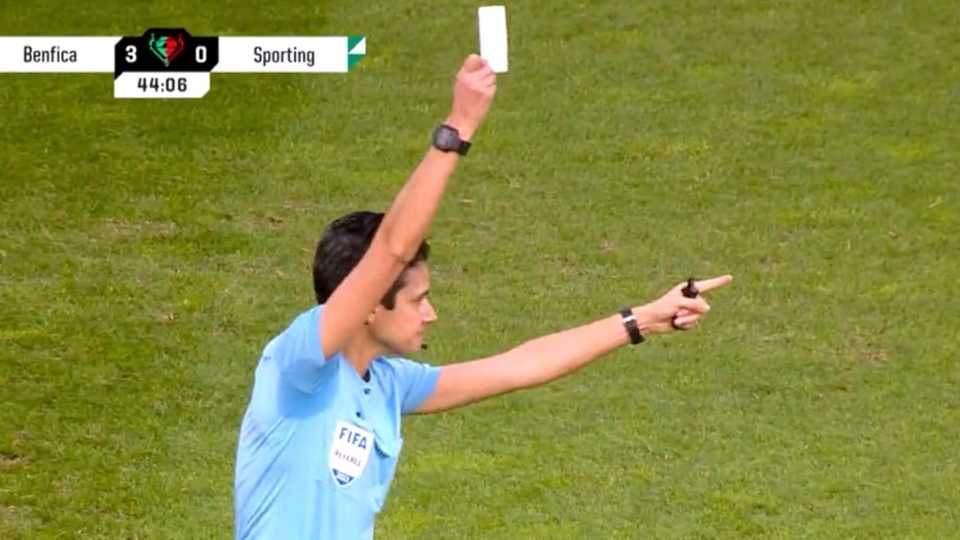
The historic moment came just before half-time in a women’s fixture in Portugal, with Benfica leading 3–0. The referee unexpectedly pulled out a white card and displayed it just like a traditional booking, sparking confusion and widespread discussion among supporters.
So, what exactly does a white card mean?
In that particular match, someone in the dugout reportedly fell ill near the end of the first half. Medical teams from both clubs quickly rushed over to help. After the situation was brought under control, the referee awarded a white card—not as punishment, but as recognition.
Unlike yellow and red cards, which penalize misconduct, the white card is designed to celebrate fair play and positive actions on the pitch. The gesture was met with applause from fans inside the Estádio da Luz, as it highlighted the quick and compassionate response of the medical staff.
The concept was part of a broader initiative in Portugal aimed at promoting ethics in sport. The idea behind the white card is simple: reward good behavior instantly during a match. It joined other recent football innovations such as concussion substitutions and extended stoppage time, both seen during the 2022 World Cup in Qatar.
Despite its positive reception, the white card hasn’t yet become a regular feature in global football. While the Portuguese Football Federation adopted it domestically, the International Football Association Board (IFAB) has not officially added it to the Laws of the Game.
According to Portugal’s National Plan for Ethics in Sport, the purpose of the card is to “recognise and reward ethically positive behaviour” from players, staff, and even fans. However, there are still no strict guidelines on when referees should use it.
The white card isn’t the only experimental idea football has explored in recent years. In early 2024, discussions around a proposed blue card—which would temporarily send players off for cynical fouls or dissent—sparked debate before being shelved after backlash.
Earlier, in 2018, a green card was trialled at the CONIFA World Football Cup. Players shown a green card had to leave the pitch immediately but could be replaced, aiming to reduce dissent without issuing full dismissals.
More recently, the 2025 FIFA Under-20 World Cup tested purple and blue “FVS cards,” allowing coaches to challenge decisions as an alternative to VAR.
While not all these innovations have stood the test of time, they show football’s ongoing efforts to evolve—not just in rules, but in promoting fairness, respect, and sportsmanship across the game.


 admin
admin