 admin
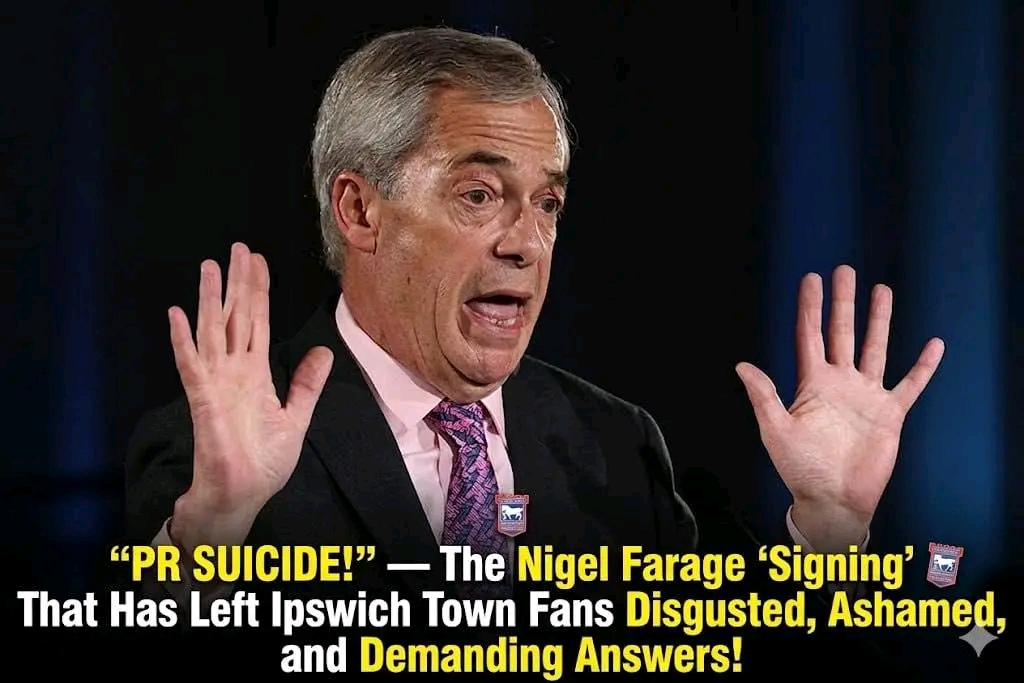
adminIpswich Town Caught in Political Storm After Nigel Farage Visit to Portman Road
Ipswich Town have unexpectedly found themselves at the heart of a growing controversy after a high-profile visit from Nigel Farage to Portman Road sparked intense debate among supporters and raised concerns about the club’s judgement.
What initially seemed like a routine stadium booking quickly turned into a public relations issue. Farage used the visit as a platform for political messaging, with widely shared images showing him holding a customised Ipswich shirt and touring key parts of the ground—effectively drawing the club into a political spotlight it hadn’t intended to enter.
A Situation That Escalated Rapidly
Early reports indicate the booking may not have clearly identified Farage or his political ties, potentially putting the club in a difficult position from the start. However, the real controversy stems from what followed.
Once Farage arrived, it became obvious that this was no ordinary visit. With cameras, security, and an entourage present, the nature of the event was clear. Critics argue that at that moment, the club had an opportunity to reassess.
Allowing access to areas like the dressing rooms meant the stadium became a backdrop for political imagery—whether by choice or by oversight—and that decision now sits at the centre of the backlash.
Fan Reaction: Strong and Divided
Supporters have reacted passionately, though opinions vary.
Some feel the club compromised its identity, particularly given its reputation for inclusivity and community values. Even an indirect link to political campaigning has unsettled sections of the fanbase.
Others have called for perspective, suggesting that if the booking followed normal procedures, denying access could itself have appeared politically motivated.
From this angle, the club may have been navigating a situation with no clear “right” outcome.
Both sides highlight just how complex—and sensitive—the situation has become.
Blurring the Line Between Sport and Politics
Football clubs often host public figures, including politicians, as part of their commercial operations. But this situation appears to have crossed an unwritten boundary.
There’s a difference between attending a match as a guest and using club facilities for political messaging. By permitting the latter, Ipswich blurred the line between football and politics—something that can quickly spiral in today’s media landscape.
Silence Has Made Matters Worse
One of the biggest criticisms has been the club’s lack of communication.
In moments like this, silence rarely helps. Without clarity on what happened, what staff knew, or how decisions were made, speculation has filled the void.
A clear and transparent statement could have helped control the narrative. Instead, the absence of one has only intensified frustration and scrutiny.
Lessons for the Future
This incident serves as a warning not just for Ipswich, but for football clubs in general.
As football continues to intersect with business and media—and occasionally politics—clubs must be ready to respond decisively when situations evolve.
For Ipswich, the focus now shifts to repairing trust. That means engaging with supporters, reaffirming core values, and introducing clearer policies around stadium use. Transparency will be crucial in rebuilding confidence.
A Preventable PR Misstep
While the situation may not have been entirely avoidable, it was likely manageable.
Ipswich didn’t need to take a political stance—but stronger awareness and quicker judgement could have prevented things from escalating. Recognising when a routine booking had become something more was key.
Instead, the club now faces the fallout from a controversy that might have been avoided.
As things settle, one lesson stands out: in modern football, perception can be just as important as reality—and Ipswich Town are now dealing with the consequences of both.

 admin
admin