 admin
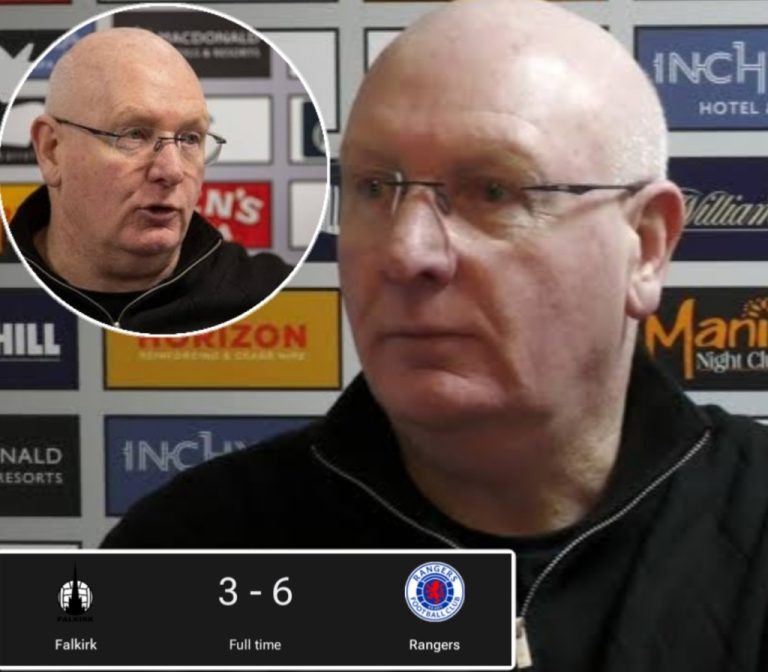
adminA chaotic night at Falkirk Stadium ended in controversy as Falkirk boss John McGlynn accused several Rangers FC players of “disrespectful behaviour” after his side’s dramatic 6–3 defeat—despite storming into an early 2–0 lead.
What initially looked like a major upset quickly flipped into a commanding Rangers comeback. The visitors recovered from their shaky start to dominate, especially in the second half, and secure an emphatic win. However, the post-match focus shifted away from the football, with McGlynn revealing he refused to shake hands with three individuals at full-time.
The fallout has triggered intense debate, with Rangers supporters dismissing the accusations as emotional reactions to a heavy loss.
Fast start stuns Rangers
Falkirk began with energy and intent, pressing aggressively and unsettling Rangers early on. Their approach paid off as they capitalised on defensive uncertainty to score twice and take a surprise 2–0 lead, igniting the home crowd and raising hopes of a famous victory.
At that point, Falkirk looked sharp and organised, while Rangers appeared rattled. But that momentum didn’t last.
Rangers regain control
Rangers gradually settled, taking charge in midfield and improving their pressing structure. As they gained control of possession, Falkirk were pushed deeper, and the game began to tilt.
The equaliser proved decisive. From there, Falkirk lost their grip, and Rangers took over both physically and tactically. By half-time, the momentum had already swung heavily in the visitors’ favour.
How Rangers turned it around
The comeback wasn’t just about moments—it was built on control and tactical discipline:
- Dominating midfield to cut off Falkirk’s counter-attacks
- Winning second balls consistently
- Overloading wide areas with advanced full-backs
- Managing tempo effectively to dictate the flow of the game
As Falkirk’s structure weakened, spaces opened up, and Rangers exploited them ruthlessly. The second half became one-sided, with the final 6–3 scoreline highlighting Rangers’ attacking power and Falkirk’s fading intensity.
McGlynn’s post-match accusations
Despite the result, attention quickly turned to McGlynn’s comments after the final whistle. He accused certain Rangers players of acting in a “disrespectful” manner and confirmed he deliberately refused handshakes with three individuals.
“There are standards in football,” he said. “What I saw didn’t meet them.”
He declined to name those involved or give specific examples but insisted his reaction was justified.
“We started well and deserved our lead,” he added. “But I won’t ignore what I saw afterwards.”
His remarks split opinion—some saw understandable frustration, others viewed it as an emotional response to defeat.
Rangers fans push back
Rangers supporters quickly rejected the claims, focusing instead on their team’s performance.
Many argued the result was purely down to quality:
“You don’t score six goals and get called disrespectful—that’s just excuses,” one fan said.
Another added: “Coming back from 2–0 down like that isn’t disrespect—it’s dominance.”
Others praised the team’s mentality and composure in turning the game around.
Across social media, many labelled McGlynn’s comments as “sour grapes.”
Wider reaction
Neutral observers offered a more balanced view, noting that emotions often run high after dramatic games—especially when a team collapses after a strong start.
However, the lack of specific details behind McGlynn’s accusations made them difficult to fully assess. His refusal to shake hands became a talking point, seen by some as frustration and by others as unnecessary theatrics.
Final word
From a footballing perspective, the match was a tale of two halves. Falkirk’s bright start showed promise, but their inability to sustain it proved costly.
Rangers, on the other hand, showcased resilience, tactical control, and clinical finishing to produce a dominant comeback.
Yet beyond the scoreline, the match will also be remembered for the controversy that followed—McGlynn’s accusations ensuring this is a game that will be talked about for more than just the result.
As one supporter put it:
“Rangers scored six. That says everything.”

 admin
admin